
Discover New Hampshire – The ninth state of the original thirteen states of the USA
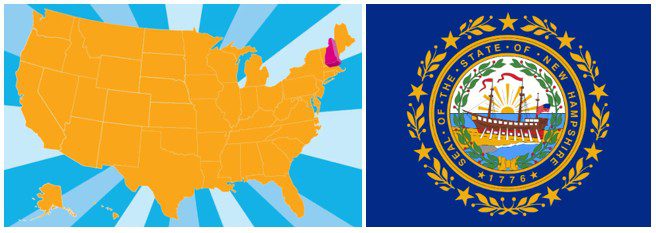
New Hampshire was the ninth state to be ratified in the Constitution on June 21, 1788.
The first 13 states of the United States of America were comprised of the original British colonies established between 17th and 18th centuries.
Today, the American flag prominently displays 13 horizontal red and white stripes representing the original thirteen colonies.
Fast Facts
- Nickname: The Granite State
- Statehood: 1788; 9th state
- Capital: Concord
- Biggest City: Manchester
- Abbreviation: NH
- State Bird: Purple finch
- State Flower: Purple lilac
History
- People lived in what’s now New Hampshire at least 12,000 years ago. Thousands of years later Native American tribes, including the Abenaki and the Pennacook, lived on the land.
- French and English explorers began to arrive in the 1500s, and the English established the first permanent European settlement in 1623. The French and English fought during the late 1600s and early 1700s, and at first the Native American tribes tried to stay out of the wars. But eventually they sided with the French, and as the British won more battles, the Native Americans were forced out of the region.
- In 1776, during the American Revolution, New Hampshire became the first colony to create a constitution and declare its independence from Great Britain. In 1788 it was named the ninth U.S. state.
Why is it called New Hampshire?
- Englishman John Mason named New Hampshire after Hampshire county in England where he’d lived as a boy. He invested in building on the land, but never left England to see it.
- New Hampshire is nicknamed the Granite State because it has a history of granite mining.
Geography
- New Hampshire is bordered by Canada in the north, Maine and the Atlantic Ocean in the east, Massachusetts in the south, and Vermont in the west. It can be divided into three different regions.